Nature Hub Climate Week NYC 2026 in Review: From a £400 Million TFFF Commitment to New Ocean Economy Insights
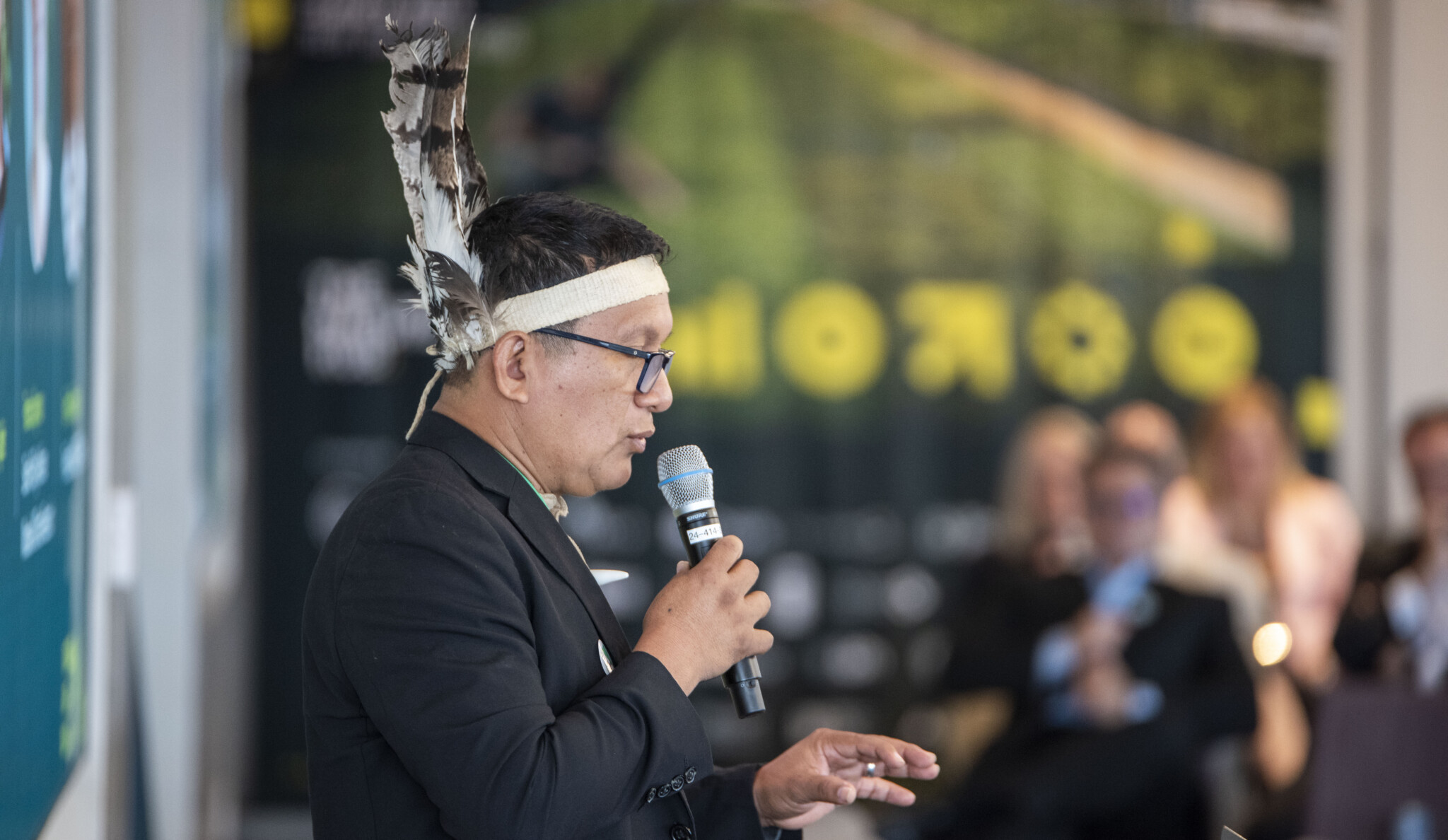
Fermín Chimatani, President of ANECAP, discusses recent progress in JREDD+ in Peru at the Nature Hub. Photo: Pat Hinton/N4C
More than 850 participants gathered at the Nature Hub Climate Week NYC on September 23, for a day of high-level discussions, major announcements, and new partnerships focused on accelerating nature-based climate action. From significant progress in tropical forest finance and new findings on global forest carbon loss to the Hub’s first-ever ocean-focused programme, the event showcased growing momentum behind nature as a cornerstone of climate resilience, economic prosperity, and sustainable development.
Convened by the Nature4Climate Coalition and more than 40 strategic partners at the KPMG’s Manhattan headquarters, the Nature Hub was the meeting point for leaders from government, finance, business, civil society, Indigenous Peoples’ organizations, and academia, all working to advance practical solutions to the climate and biodiversity crises.
Over a packed programme of discussions, participants explored how to scale finance for forests, strengthen carbon markets, mobilize investment in coastal resilience, and position nature as critical infrastructure for a resilient global economy. Several major announcements underscored the increasing political and financial support for nature ahead of COP31 in Turkey.
Read more
Related articles for further reading
Heard at the Nature Hub
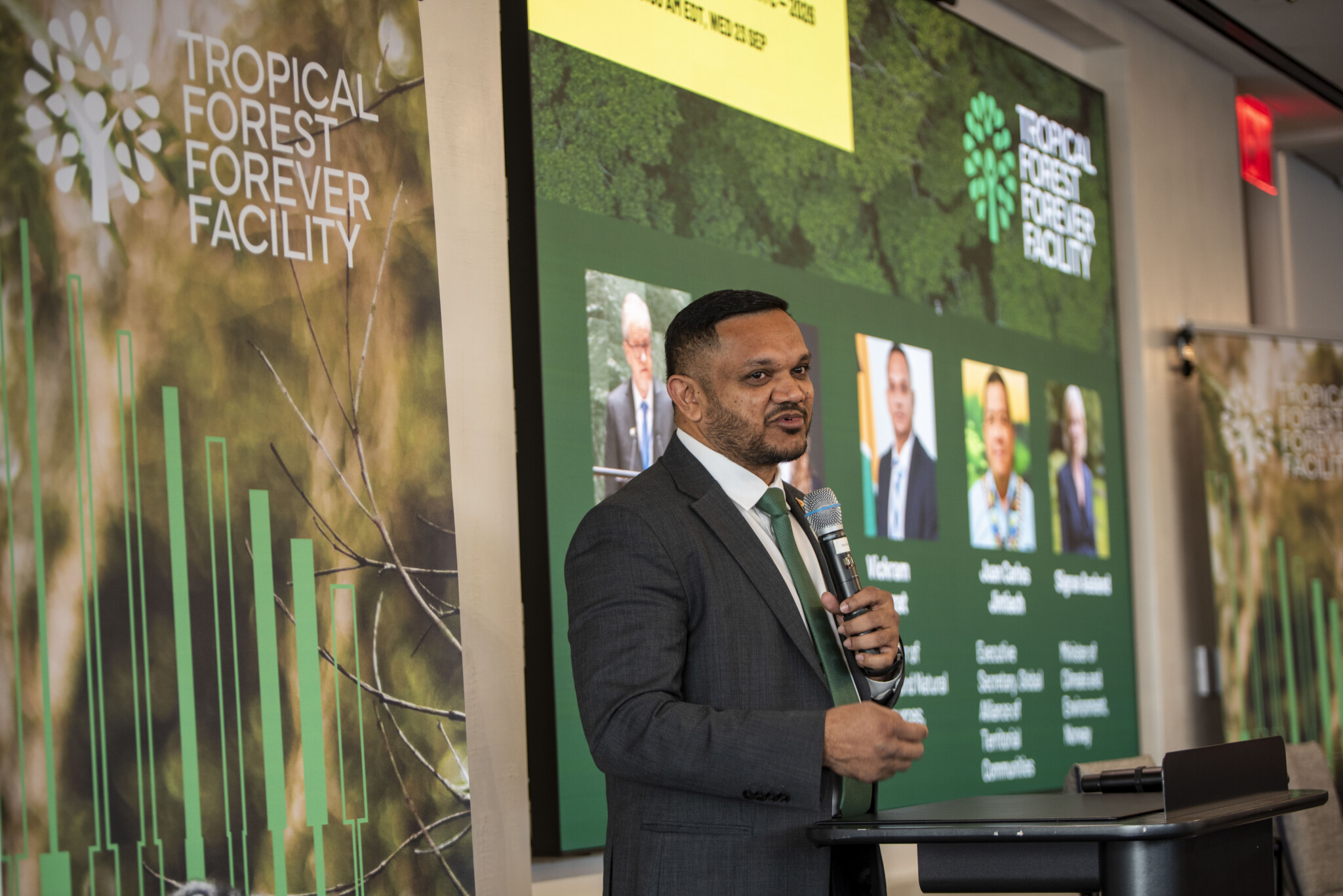
“Financing forest conservation should not be seen as a handout. It should not be seen as a donation. It should not be even seen as CSR [Corporate Social Responsibility], but rather it's an investment.” - - Hon. Vickram Bharrat, Minister of Natural Resources, Guyana. Photo: Pat Hinton/N4C
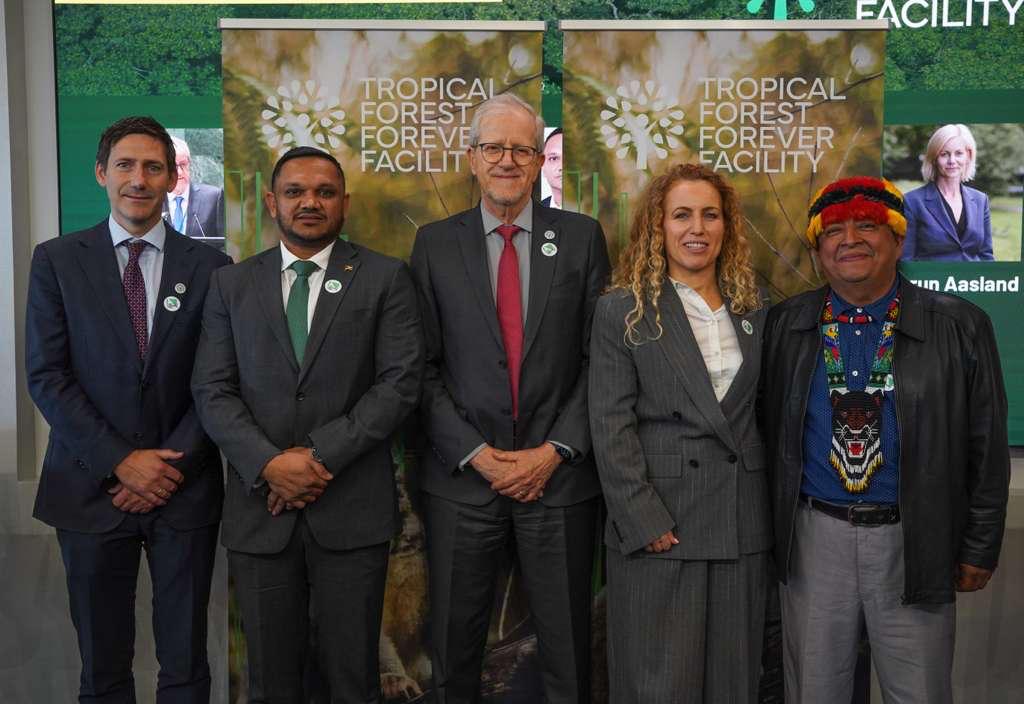
“This investment from the UK government is very positive because, indirectly, all the actors, private sector and multilateral organizations, are listening and watching. These kinds of signals have to be sent. We have to transmit to other people, individuals, philanthropic organizations, and the private sector that they need to collaborate. The reason they need to invest in the TFFF is that it is not just for us; it is for people, for humanity, and also for tackling climate change.” - Juan Carlos Jintiach, Executive Secretary of the Global Alliance of Territorial Communities (GATC). Photo: Fernando Donasci/Brazilian Ministry of Environment
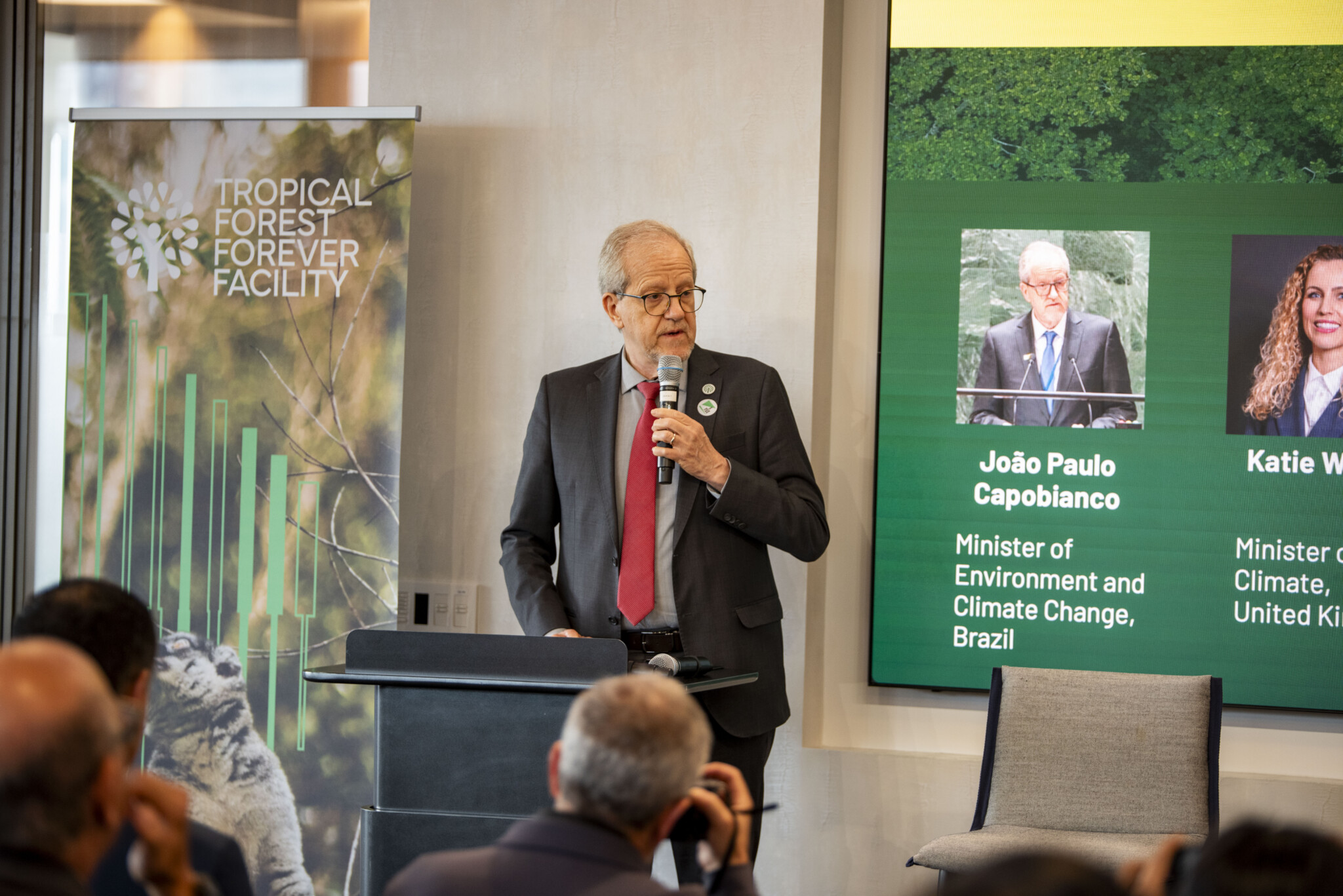
“This is not a donation. It is an investment. If a company can invest in a fund that delivers environmental and social results while also providing financial returns, why wouldn't it? We are making this announcement in New York to send a very clear message: the initiative can work with both public and private capital.” - João Paulo Capobianco, Brazil’s Minister of Environment and Climate Change. Photo: Pat Hinton/N4C
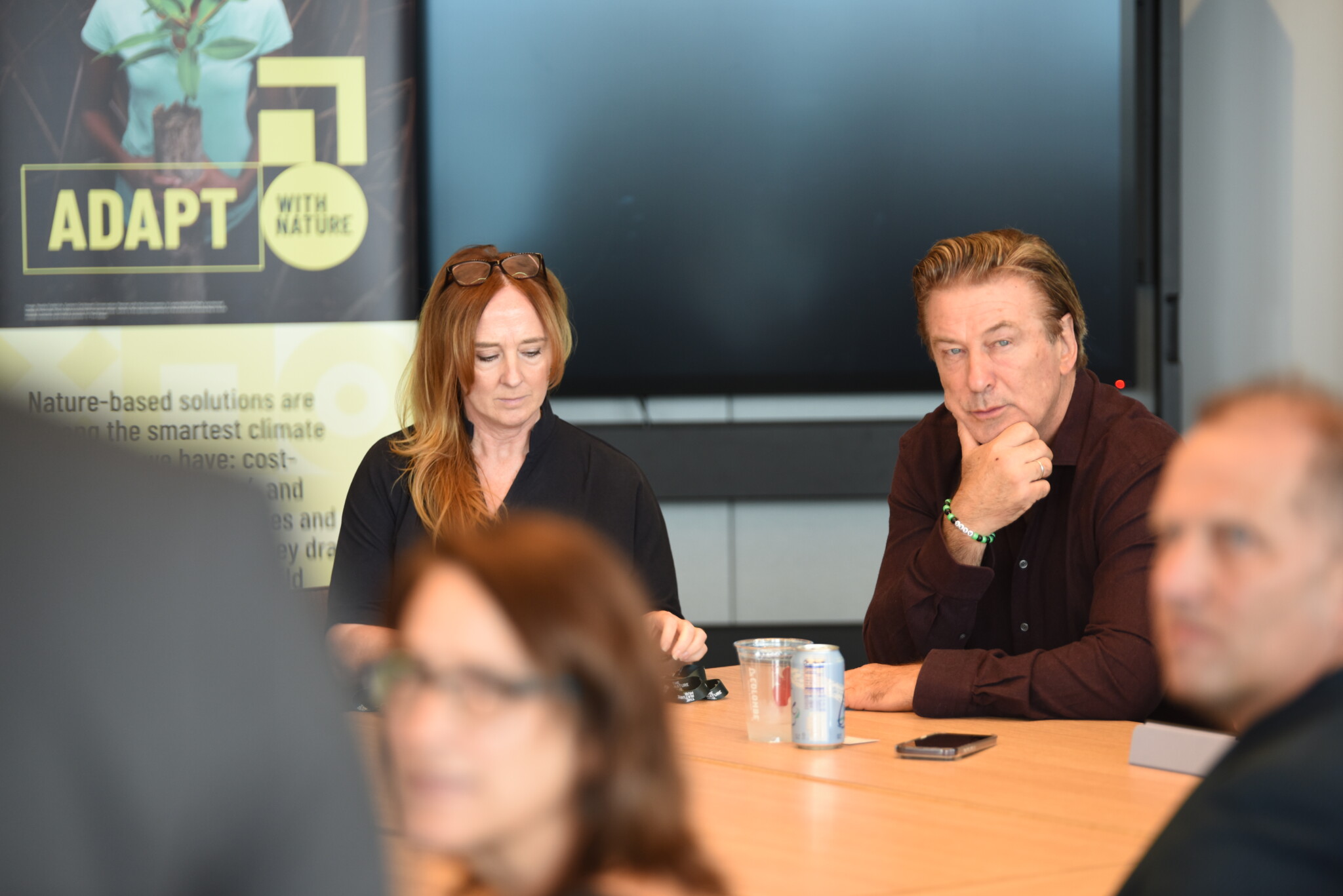
“Events like this often serve multiple purposes, and one of them is meeting people who are engaged in the nature movement at a sophisticated level. Here in the United States, we’ve seen environmental protection take a real beating, and it’s just unspeakable. But coming here gives me hope. I could be in a room full of these people every day.” - Alec Baldwin, actor and film producer. Photo: Pat Hinton/N4C
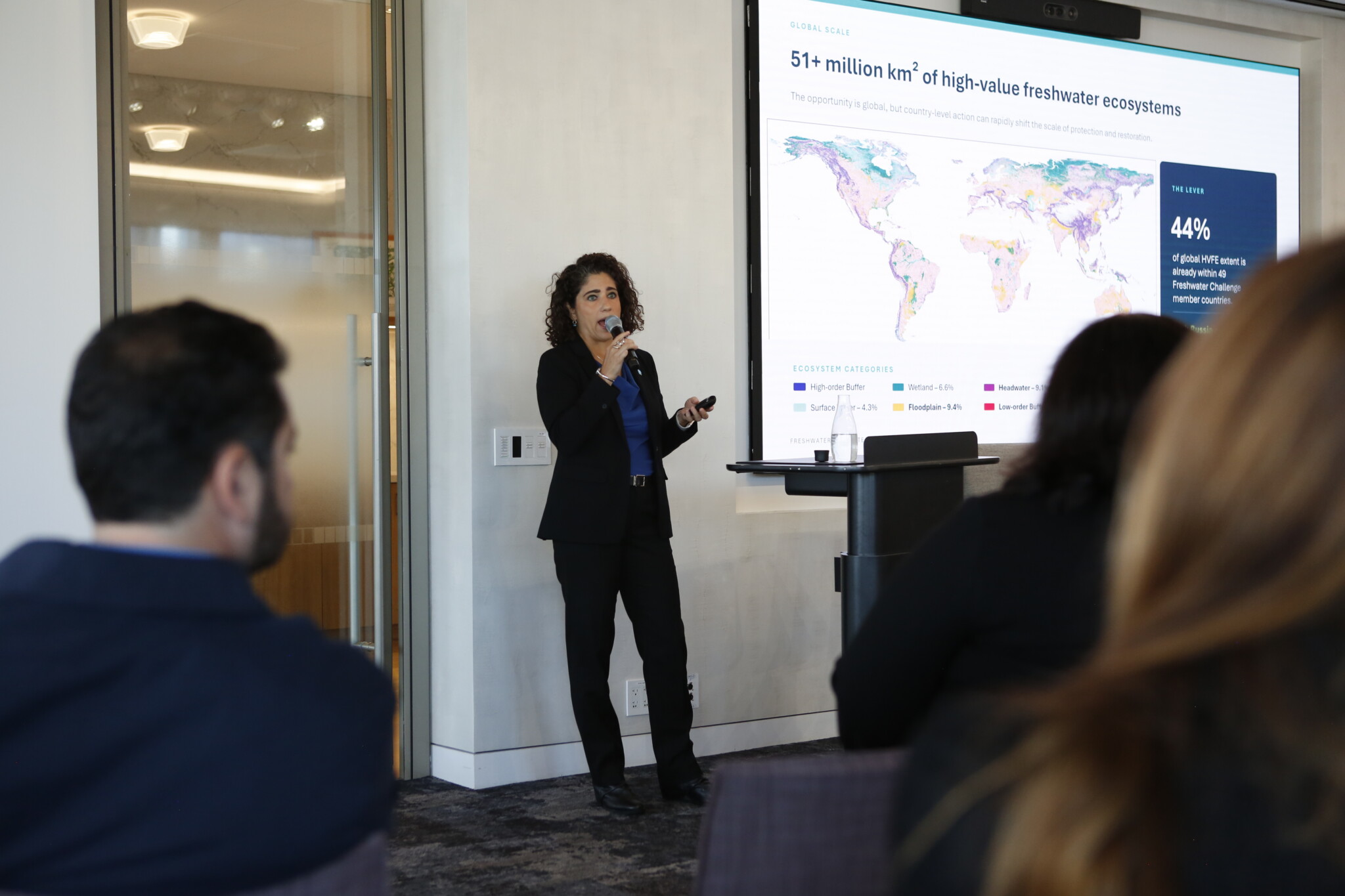
“When we restore forests with freshwater ecosystems at the center, we unlock a powerful opportunity to address both the climate and water crises. These projects can deliver meaningful climate mitigation while attracting carbon finance that helps scale restoration efforts and maximize benefits for people and nature.” - Maíra Bezerra, Conservation International Sr. Director of Freshwater Science. Photo: Leandro Viana/N4C
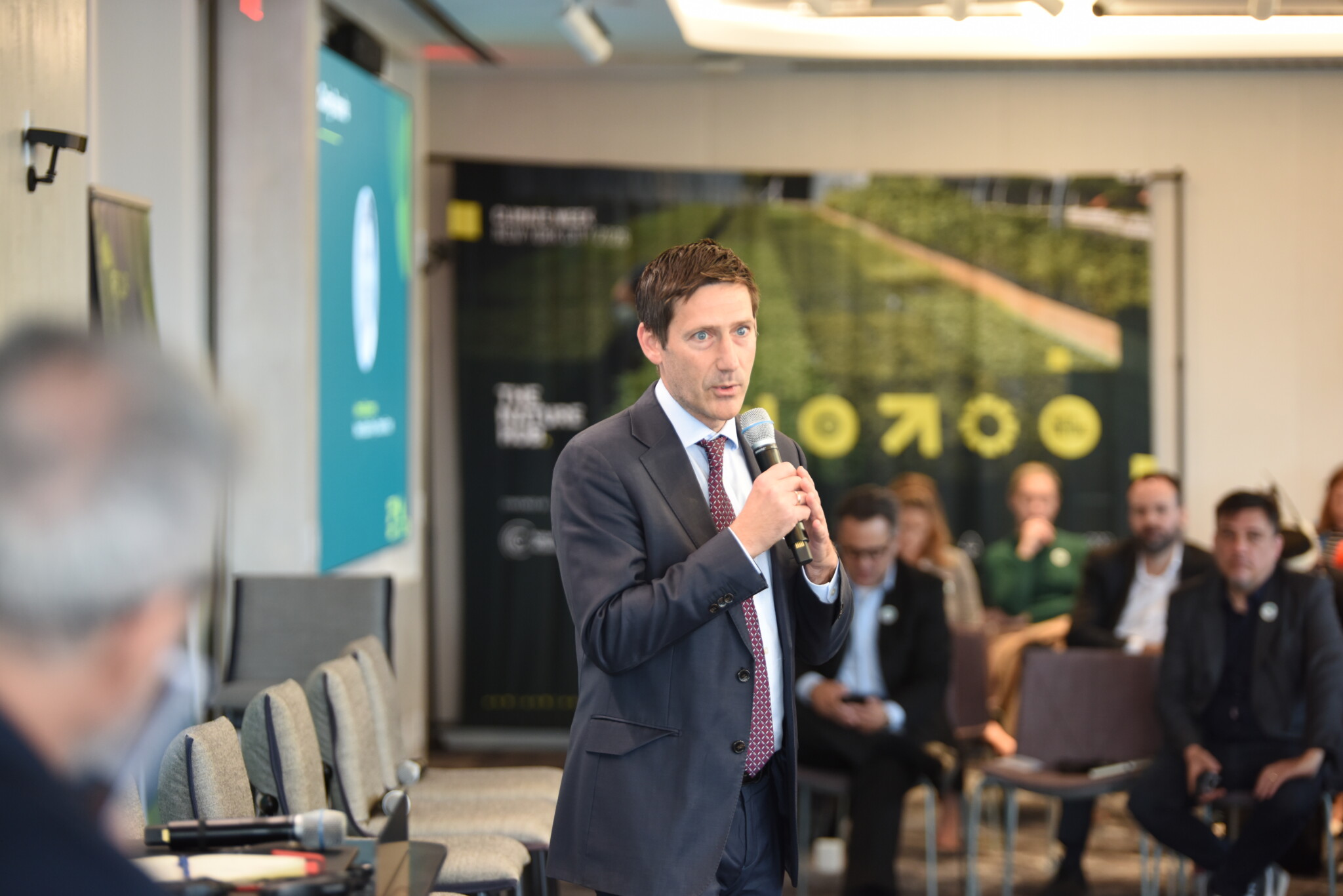
"JREDD is the highest quality carbon mitigation you can find. It's the highest environmental integrity you can find and among the strongest social-benefit models available in the market." - Andreas Dahl-Jørgensen, Director of Norway's International Climate and Forest Initiative (NICFI). Photo: Pat Hinton/N4C
Forest Finance Roadmap Progress Report
One of the week’s most significant moments came with the launch of the latest Forest Finance Roadmap Progress Report by the Forest & Climate Leaders’ Partnership (FCLP).
The report highlights tangible progress toward closing the estimated US$66.8 billion annual forest finance gap required to halt deforestation and restore forest ecosystems. Among the key achievements reported were US$473 million invested in jurisdictional REDD+ programs, US$1.73 billion mobilized for the forest bioeconomy, and US$442 million disbursed toward sustainable commodity value chains.
The report also revealed growing support for the Tropical Forest Forever Facility (TFFF), with commitments to its Sponsor Tranche reaching US$7.3 billion, bringing the initiative closer to its target of raising US$10 billion from governments by the end of 2026.
That momentum received a significant boost during the Nature Hub when the United Kingdom officially announced its intention to invest £400 million in the TFFF. The announcement adds to commitments already made by Brazil, Norway, Germany, Indonesia, France, Luxembourg, and philanthropic partners including the Minderoo Foundation and The Nature Conservancy.
Speaking at the event, Brazil’s Minister of Environment and Climate Change, João Paulo Capobianco, emphasized that the facility is attracting increasing interest from institutional investors and pension funds.
“This is not a donation. It is an investment. If a company can invest in a fund that delivers environmental and social results while also providing financial returns, why wouldn’t it? We are making this announcement in New York to send a very clear message: the initiative can work with both public and private capital.” he said.
The announcement reinforced growing confidence that large-scale mechanisms capable of rewarding countries for protecting tropical forests are moving from concept to reality.
New Data Reveals the Hidden Crisis of Forest Degradation
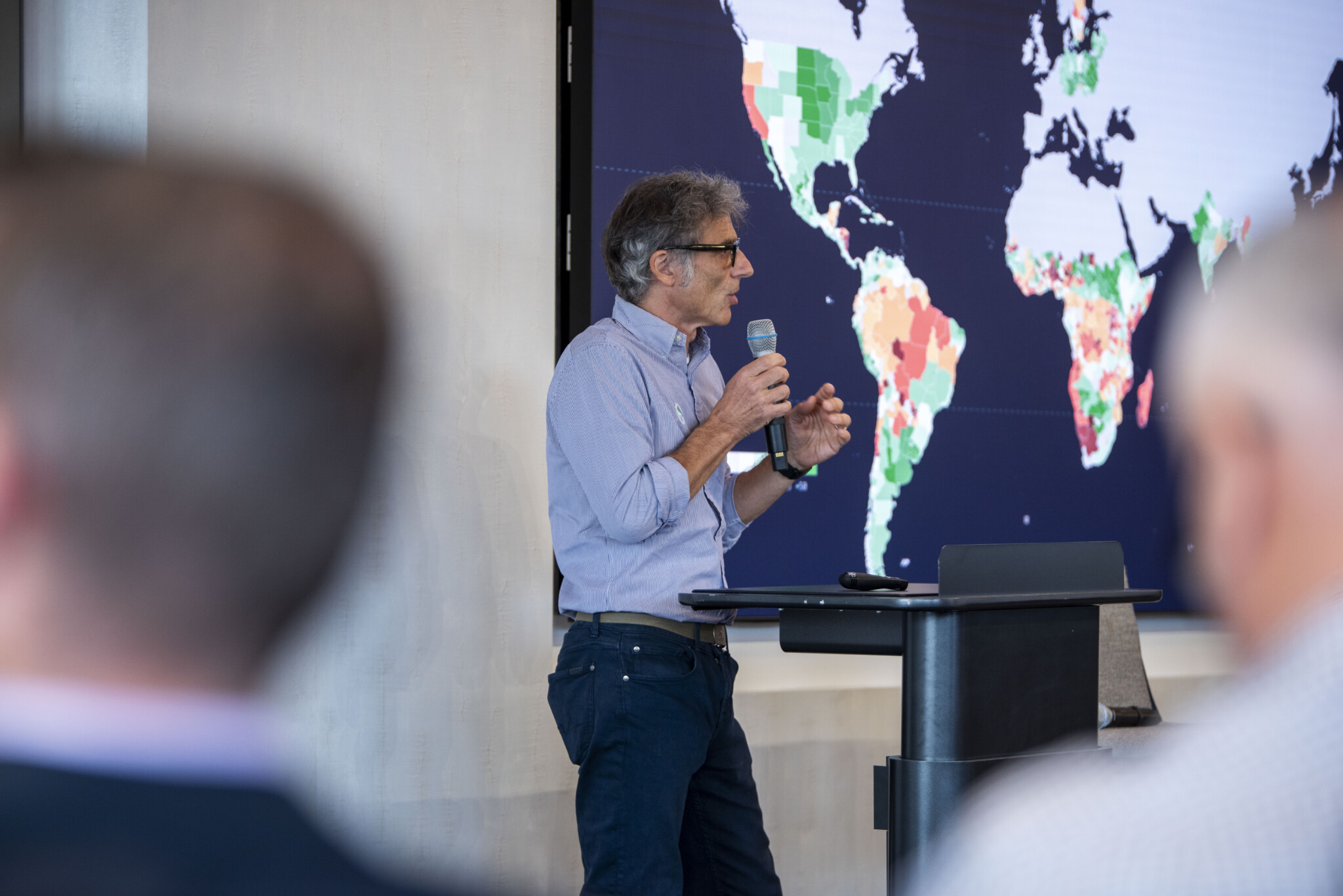
The Nature Hub also hosted the launch of the State of Forest Carbon 2026, a global assessment by Chloris Geospatial drawing on 26 years of satellite observations and annual forest carbon measurements.
The findings challenge conventional understandings of forest loss. According to the report, nearly 80 percent of tropical forest carbon loss results from degradation rather than outright deforestation, a figure that exceeds 90 percent in the Congo Basin.
Because degraded forests often remain standing, these losses frequently go undetected by traditional monitoring systems despite their significant climate impact.
The report further identifies climate shocks, including the 2015-2016 El Niño event, as major drivers of simultaneous forest carbon losses across tropical regions, suggesting that climate-related forest risks may be more globally connected than previously understood.
At the same time, researchers presented evidence that effective policy interventions and jurisdictional carbon programs can reverse these trends within years, highlighting successful restoration efforts from Burkina Faso, Thailand, Peru, and Costa Rica.
Jurisdictional REDD+ Moves Into the Spotlight
Jurisdictional REDD+ took centre stage at the Nature Hub, with government representatives and buyers exploring how forest protection at scale can deliver lasting benefits for communities. Experiences from Ghana, Costa Rica and Argentina’s Misiones province illustrated the work behind these programmes—from strengthening governance and sharing benefits to supporting farmers, schools and local infrastructure. Amazon highlighted the potential to support systemic change, while speakers called for stronger demand, faster credit issuance and long-term partnerships at prices that sustain conservation. Ensuring finance reaches Indigenous Peoples and local communities also remained a central priority in the discussion.
“JREDD is the highest quality carbon mitigation you can find. It’s the most social benefit that you can find. It’s the highest environmental integrity you can find. We need both. We need to tell the story that JREDD is the highest quality carbon you can find on the market,” said Andreas Dahl-Jørgensen, Director of Norway’s International Climate and Forest Initiative (NICFI).
Elsewhere, SHIFT-CM, a multi-stakeholder initiative focused on improving the scientific foundation of Natural Climate Solutions (NCS) crediting led by Yale University, Audubon and The Nature Conservancy, brought together scientists, policy experts and corporate buyer representatives during a Nature Hub session to discuss how better understanding of forest carbon risks can strengthen confidence in carbon markets. Participants explored how maps of disturbance, carbon loss and forest recovery can inform project design and safeguards. The session also explored how to strengthen the link between the scientific process and policy development.
Beyond the Backlash
Moderator Pedro Barata of EDF opened this Nature Hub session on backlash against the carbon market by saying he was ready to move past this issue and wanted to talk about the good work happening now. His panel made a convincing case that the market has moved on. Peter Ellis of the Audubon Society explained how Shift CM’s 200-plus scientists and practitioners are improving baselines, leakage measurement, durability risk mapping and digital MRV, arguing that the science supports acting now and learning as we go. Jeremy Manion of the Arbor Day Foundation said capital is arriving earlier and buyers are getting smarter. Even so, fewer than 100 companies are signing 10–15-year offtakes, and poor standardization still puts off would-be buyers. Christine Cadigan of the American Forest Foundation shared early findings from a near-complete feasibility study on a market-wide permanence trust. The trust would take on long-term reversal liability, with modelled premiums of 1–25 percent of the credit price.
Carl Kish of Beyond Alliance pointed to three decisions in the next six to 12 months that will shape whether contracted durability counts. These are the Article 6.4 supervisory body’s work on reversal risk, the EU’s proposal for up to 250 million tonnes of domestic removals in its Emissions Trading System by 2040, and the SBTi corporate net-zero standard. Alexia Kelly, High Tide Foundation and an ICVCM board member, said integrity is now an operating principle rather than a debate. The voluntary market is back above US$1 billion, with around US$12.5 billion of forward offtakes signed in 2025. She also warned that nature is losing the narrative to industrial decarbonization and urged the room to show up in the rulebook processes of the next two years. On whether buyers should wait, the panel was clear: there will always be a reason to wait, but credible credits are available now.
Oceans Take Centre Stage for the First Time
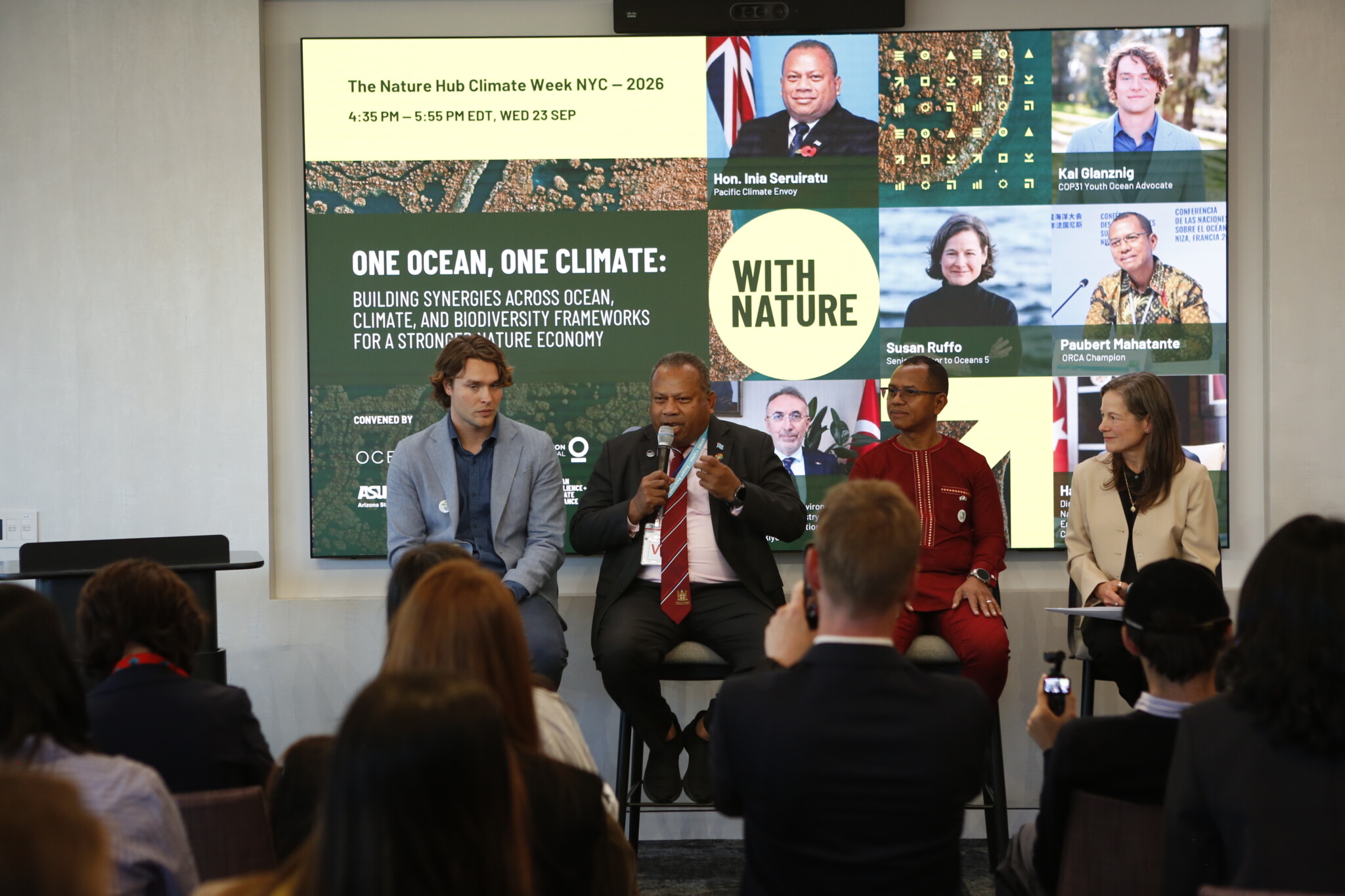
Photo: Leandro Viana/N4C
For the first time in Nature Hub history, the Ocean became one of the central focus of programming.
Through high-level plenary discussions and dedicated sessions, participants explored how coastal ecosystems and ocean-based solutions can contribute to climate resilience, biodiversity protection, and sustainable economic development.
A recurring theme throughout the discussions was the need to better integrate ocean action into international climate processes ahead of COP31.
Fiji’s Pacific COP31 Envoy for the Ocean, Inia Seruiratu, called for greater recognition of oceans within the UNFCCC process.
“One of the issues that negotiators and political leaders will need to address when it comes to mainstreaming oceans within the UNFCCC process is moving the Ocean from a dialogue item to a formal agenda item” said Inia Seruiratu, Fiji’s Pacific COP31 Envoy for the Ocean. “When the climate changes, it affects the Ocean, and when the Ocean changes, the consequences for humanity are profound. There cannot be a healthy planet without a healthy Ocean . Let’s continue the dialogue, but let’s also get serious about implementation. Let’s get serious about action. We all have a responsibility.”
The conversations reflected a growing consensus that the ocean economy, coastal resilience, and marine ecosystems must become a more visible and integrated part of the global climate agenda.
Liverpool FC Joins Forces with ORRAA
Another notable announcement came through a new partnership between Liverpool FC and the Ocean Risk and Resilience Action Alliance (ORRAA).
Launched at the Nature Hub, the collaboration aims to raise awareness of ocean health and the challenges facing coastal communities through supporter engagement, ocean education, research, and thought leadership.
As part of Liverpool FC’s sustainability strategy, The Red Way, the partnership seeks to bring greater attention to Sustainable Development Goal 14, Life Below Water, one of the least-funded global goals.
“We’re really excited to collaborate with ORRAA on the next step of our work on ocean health and advocacy,” said Rishi Jain, Liverpool FC’s Director of Impact. “Liverpool is a port city with a longstanding connection to the Ocean, and these efforts reflect the important role it plays in our environment, economy, culture and history.”
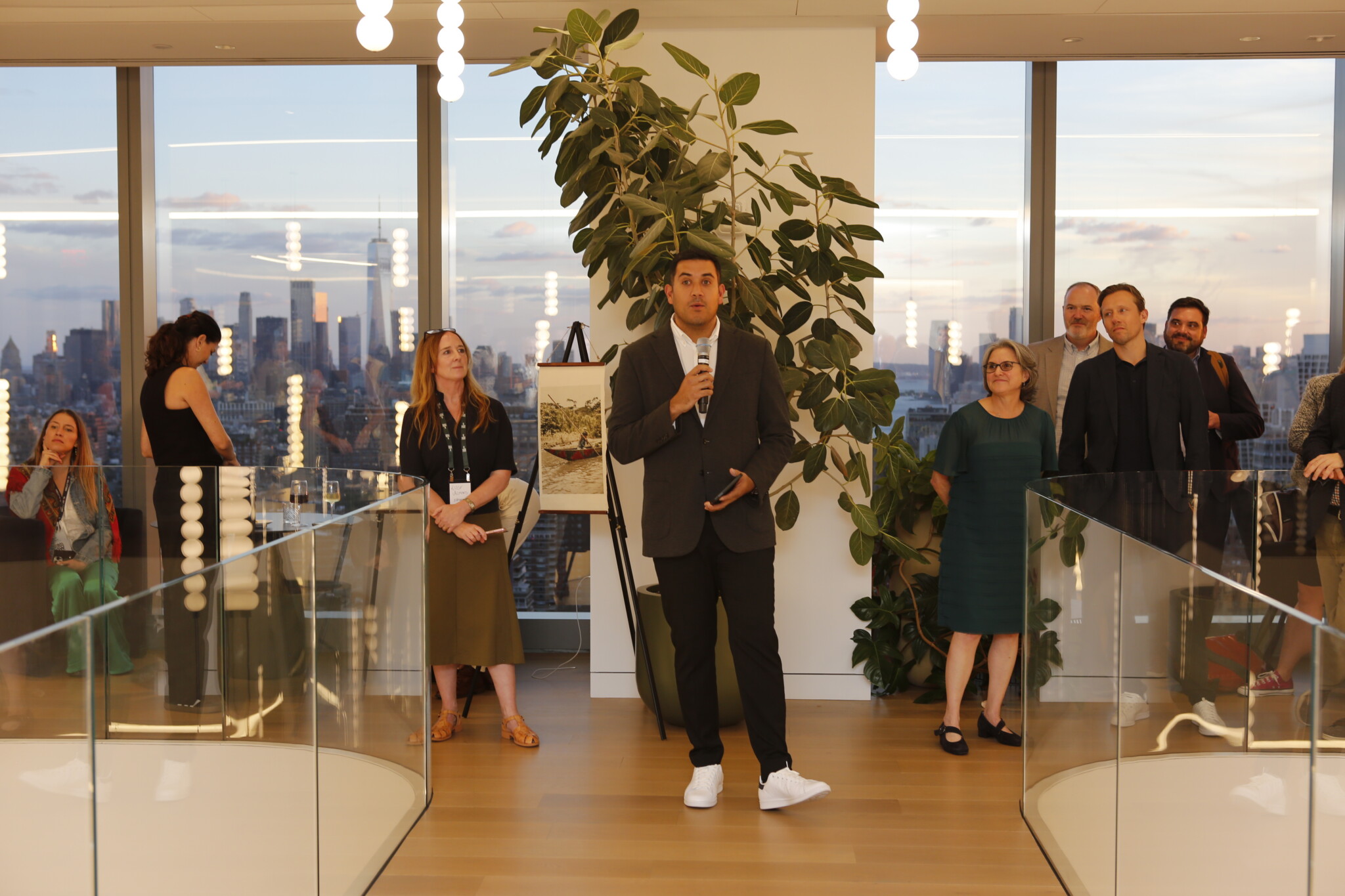
“We’re really excited to collaborate with ORRAA on the next step of our work on ocean health and advocacy. Liverpool is obviously a port city with a longstanding connection to the Ocean and these efforts appreciate the important role that it plays in our environment, economy, culture and our history." - Rishi Jain, Director of Impact at Liverpool FC. Photo: Leandro Viana
OTHER HUB ANNOUNCEMENTS
Arizona State University announces the expansion of the Rob Walton School of Conservation Futures, now offering a Bachelor of Science in conservation and three master’s pathways in conservation, environmental management, and innovation and leadership.
Nia Tero and Arizona State University will announce the development of a new educational programme focused on Indigenous Peoples’ rights and the care for Mother Earth in Latin America and the Caribbean. The initiative aims to strengthen Indigenous participation and influence in international environmental decision-making processes, building on Nia Tero’s long-standing work supporting Indigenous leaders’ engagement in global policy spaces and ASU’s expertise in online learning and leadership development.
Forest Stewardship Council, in partnership with Chatham House, publishes a new study on the potential effects of accelerating biofuel mandates in response to the global shock, which include threats to food supplies and increased deforestation.
IDH and the Central African Forest Initiative (CAFI) have signed an agreement to establish an Investment Development & PES Hub in Cameroon, ahead of NYCW 2026. The Hub is designed to mobilise private and climate finance for sustainable agriculture, forest protection and improved livelihoods, supported by approximately USD 25 million in CAFI financing and targeting an additional USD 29 million in private investment by 2030. The signing comes as Climate Week NYC brings global finance and forest leaders to New York, reinforcing the case for blended finance models that channel capital directly into landscape-level protection and rural livelihoods in the Congo Basin.
IDH’s new report, Cultivating Capital for Smallholder Finance, reflects on six years of deploying the IDH Farmfit Fund, a EUR 100 million blended finance vehicle for smallholder value chains. The Fund has deployed more than EUR 50 million and mobilised over EUR 150 million in co-investment to date. A key insight from the report: co-investment requirements, while strengthening risk-sharing, can slow down smaller or more complex deals, pointing to portfolio-level mobilisation targets as a more flexible alternative. The report sets out further design dilemmas and trade-offs facing fund managers, investors and donors in aligning risk, flexibility and impact, offering lessons for the broader finance ecosystem as it seeks to close the smallholder finance gap.
Arbor Day Foundation shares a new way to use data and assets to develop a clearer, more complete picture of how tree planting projects benefit the people who live near them. Known as the “People Impacted Metric,” the data layer gives the Foundation a clearer picture of how many people stand to benefit from a given tree planting or distribution project.
The Paulson Institute, The Nature Conservancy, and World Wildlife Fund publishes an update to their biodiversity financing report in the Financing Nature 2026: A Mid-Decade Update report that explores where momentum is building and what it will take to bring finance for proven solutions to the scale needed for people, nature and economies to thrive.