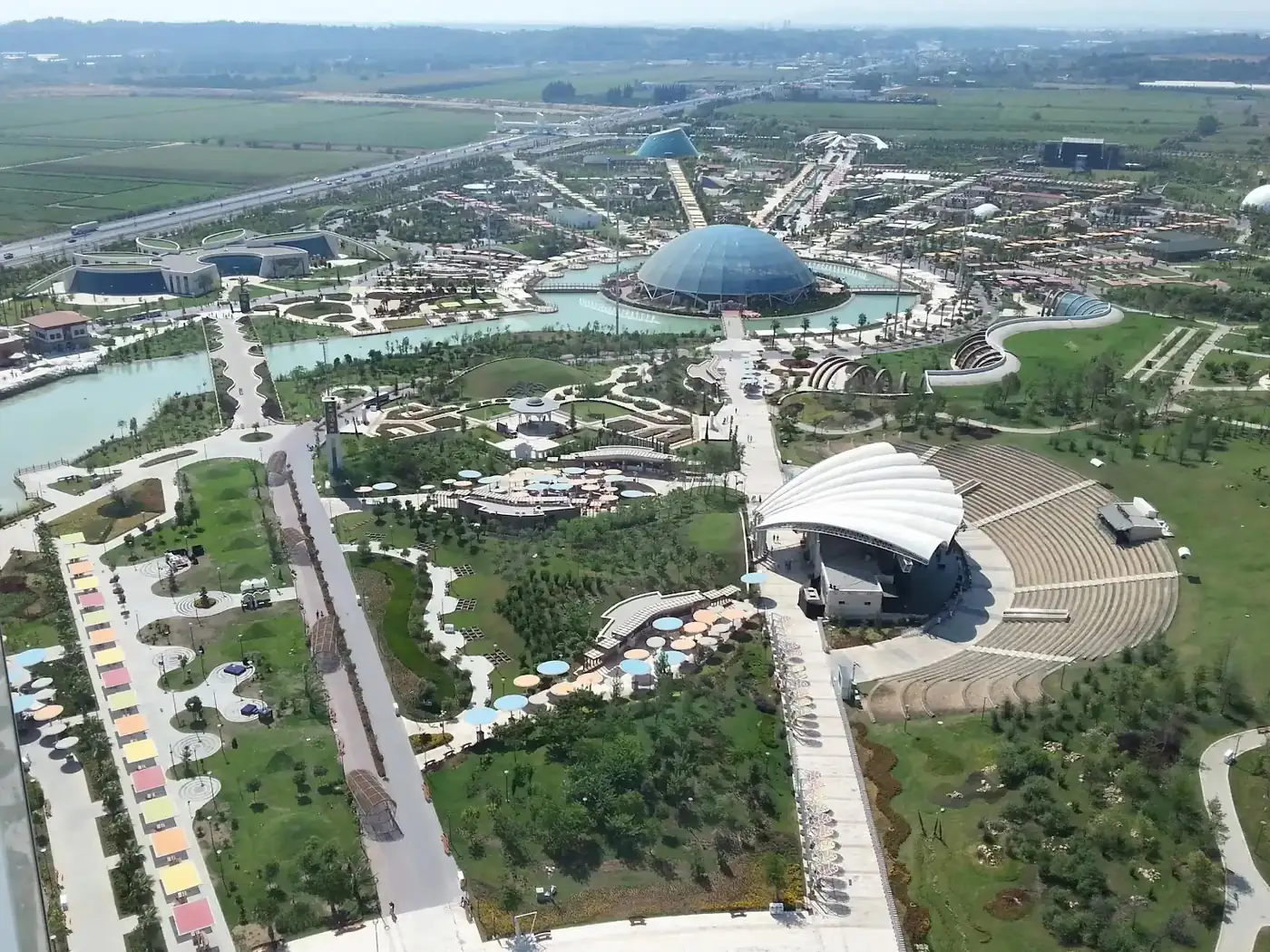
2026 COP31 Türkiye.
COP30 took the climate talks to the Amazon and confirmed nature as central to the climate agenda. COP31 has to make that centrality count. As governments head to Antalya, the COP30 Presidency has delivered its global forest roadmap, the ocean is moving up the climate agenda, and new money is flowing to tropical forests. Nature4Climate is calling on leaders to turn that momentum into decisions, finance, and action on the ground.
The conference will be hosted by Türkiye, with Australia leading the negotiations. The Pacific pre-COP in Fiji, which wrapped up in October, already set the tone: keep 1.5°C within reach, put the ocean at the center of the climate agenda, and speed up finance, the UNFCCC reported.
Read more
Related articles for further reading
Overshoot is the new starting point
October also brought the clearest picture yet of what leaders are up against. UNEP’s Emissions Gap Report 2026 finds that current policies point to 2.8°C of warming this century, and that delivering every national pledge would still leave the world at 2.6°C, making the agreed collective goal of 1.5°C now unreachable.
The cost of delay is already visible this year. A deadly glacier-collapse flood in Nepal, drought across about half of Europe, and fires tearing through Indonesia’s orangutan habitat were some of the headlines.
That raises the stakes for the fastest, lowest-regret action. The Nature4Climate coalition and its strategic allies argue that ending deforestation and slashing super-pollutants such as methane are among the quickest ways to limit the size and duration of overshoot, using tools available today.
“Ending deforestation and cutting methane are the emergency brakes the world can pull right now, and the agreements and pledges to do so are already on the table. What we need from leaders in Antalya is speed. The time for admiring the commitments is over. Leaders now need to start delivering on them.”
Lucy Almond, Chair, Nature4Climate
Nature is indeed part of the critical infrastructure keeping climate goals within reach. Governments agreed at COP28 to end deforestation and forest degradation, and the new forest roadmap is designed to lay out the path to get there. Other interventions are just as crucial, including halting peatland drainage and rewetting and restoring wetlands. Peatlands alone are the world’s most carbon-dense terrestrial ecosystems. And across forests, wetlands, mangroves, and the ocean, protecting and restoring nature cuts emissions and builds resilience at the same time.
A triple COP year, with nature in the middle
COP31 is the last of a “triple COP” year for the Rio Conventions, and the biodiversity leg has just wrapped up. At the UN Biodiversity Conference, CBD COP17, in Yerevan, leaders adopted the Yerevan Declaration, calling for faster implementation of the Global Biodiversity Framework. In the conference’s final week, the Presidencies of CBD COP17, UNFCCC COP31, UNCCD COP17, and UNCCD COP18, held by Armenia, Türkiye, Mongolia, and Egypt, also adopted the Armenia Joint Declaration on Rio Synergies, officially the CBD COP17 Joint Declaration to Accelerate Implementation of the Kunming-Montreal Global Biodiversity Framework through Effective Use of Rio Conventions Synergies. It commits the four Presidencies to carry the momentum on aligning biodiversity, climate, and land action from Yerevan to Antalya. But finance was again a difficult topic: according to the CBD Secretariat, Parties remained divided on who should pay into international biodiversity finance and on phasing out harmful subsidies. That increases the pressure on COP31 to make decisions that work together across the three conventions and enable finance to flow toward nature.
That is why the Türkiye presidency’s decision to name stronger synergies across the Rio Conventions a priority matters. With climate, biodiversity, and land all negotiated within a few months of each other, Antalya is a chance to treat them as one system rather than three separate tracks.
The ocean is a key part of that story. The co-presidents have made the ocean-climate nexus one of five pillars of the COP31 Pacific Partnership, and Türkiye has told the UN Ocean Envoy it will work toward an Antalya Ocean Declaration, according to the UNFCCC. A thematic day on ocean, seas, nature, and land use, framed as “Rio Synergy,” will put the connections on show.
The formal agenda carries several other tests. COP31 launches the second Global Stocktake, which will assess progress on existing 2030 goals and shape ambition beyond them. The environmental movement wants nature counted in it from the start rather than treated as a side track. And the money question looms over everything. Global climate finance rose 32 percent to an annual average of $1.9 trillion in 2023–2024, but flows to agriculture, forestry, and other land use fell 30 percent, and tracked adaptation finance fell 20 percent to $63 billion a year, according to the Seventh Biennial Assessment of the UNFCCC Standing Committee on Finance. UNEP’s State of Finance for Nature 2026 found that for every $1 invested in protecting nature, $30 goes to nature-destructive activity, a gap the Veredas Dialogue will bring to Parties in Antalya. On adaptation, COP31 also has to get the Global Goal on Adaptation indicators on track, so that COP32 in Addis Ababa can deliver real progress.
The forest roadmap: from paper to practice
One of COP30’s biggest promises has now been delivered. The Roadmap to Halt and Reverse Deforestation and Forest Degradation by 2030, led by the COP30 Presidency, covers all forest types as well as mangroves and peatlands, and was shaped by more than 180 submissions, according to the COP30 Presidency. It is a milestone for everyone who has pushed for forests to be treated as a core climate solution.
The challenge now is making sure it does not stay a piece of paper. The roadmap creates no new negotiating process, so its impact depends on governments, companies, and communities backing it in Antalya and beyond: building on the pillars of the sociobioeconomy, and on innovative mechanisms and solutions such as the Tropical Forests Forever Facility (TFFF) and jurisdictional REDD+ (JREDD). Momentum is building. The Netherlands has pledged up to $500 million over the next decade to the TFFF, Reuters reported, joining Brazil, Indonesia, Norway, France, Germany, and the UK. The coalition wants leaders to show collective ownership of the roadmap, with its progress embedded as an official input to the second Global Stocktake.
Lead with nature, deliver with nature
Nature cannot afford to lose the momentum it built at COP30. Turning it into results will take action both inside and outside the negotiating rooms. Much of that action is already happening through the Action Agenda, where governments, cities, communities, and businesses are putting commitments into practice, and it needs everyone on board, especially the private sector, whose investment will decide how fast solutions scale.
Inside the negotiating rooms
- Rio Conventions: adopt a formal decision advancing cooperation across the UNFCCC, CBD, and UNCCD, giving political weight to the triple COP moment.
- Adaptation: operationalize the Belém Indicators under the Global Goal on Adaptation and close remaining data gaps, so indicators translate into financed, measurable action, including nature-based approaches.
- Ocean: turn commitments into measurable action by championing the Blue NDC Challenge, creating a multi-year plan for the Ocean and Climate Change Dialogue, appointing an SCF Ocean Focal Point, and scaling coastal NbS finance.
- NDCs and the Global Stocktake: advance NDC implementation and ensure evidence on nature’s contribution to mitigation, adaptation and resilience – as well as the finance and support needed to scale action – is reflected in the second Global Stocktake, helping inform the subsequent assessment of gaps and opportunities towards achieving the Paris Agreement goals.
Beyond the negotiating rooms
- Finance: turn the $1.3 trillion Baku–Belém Roadmap into concrete, bankable pathways that include nature.
- Nature markets: catalyze investment through the TFFF, JREDD, and high-integrity carbon markets, with a guaranteed minimum share of funding directly accessible to Indigenous Peoples and local communities.
- Wetlands: integrate wetland conservation, restoration, and wise use, including peatlands and mangroves, into NDCs, NAPs, and their implementation.
- Forests: demonstrate collective ownership and leadership behind the forest roadmap, with its progress embedded as an official input to the second Global Stocktake.
Other threads in the negotiations also carry high stakes for nature and climate action. Under Article 6 of the Paris Agreement, for example, the Paris Agreement Crediting Mechanism has an important opportunity to set a new benchmark for high-integrity carbon markets and mobilize finance for credible climate solutions, including nature-based solutions. Environmental integrity has to be balanced with practicability and scalability, which is why COP31 should give the mechanism’s Supervisory Body additional guidance: to avoid compounded conservativeness, strengthen stakeholder engagement and transparency, and allow updates when new science becomes available.
From commitments to delivery
The building blocks for faster climate progress are already in place, from global agreements to local policies to large-scale implementation. Nature cuts emissions and builds resilience at the same time, so scaling investment in it delivers multiple returns at once: for climate, biodiversity, water, and livelihoods. Antalya is the moment to turn that into decisions and finance, with Indigenous Peoples, local communities, women, and youth at the center.
Follow the coalition at COP31: subscribe to our Newsletter, and check out N4C’s events calendar for Antalya.