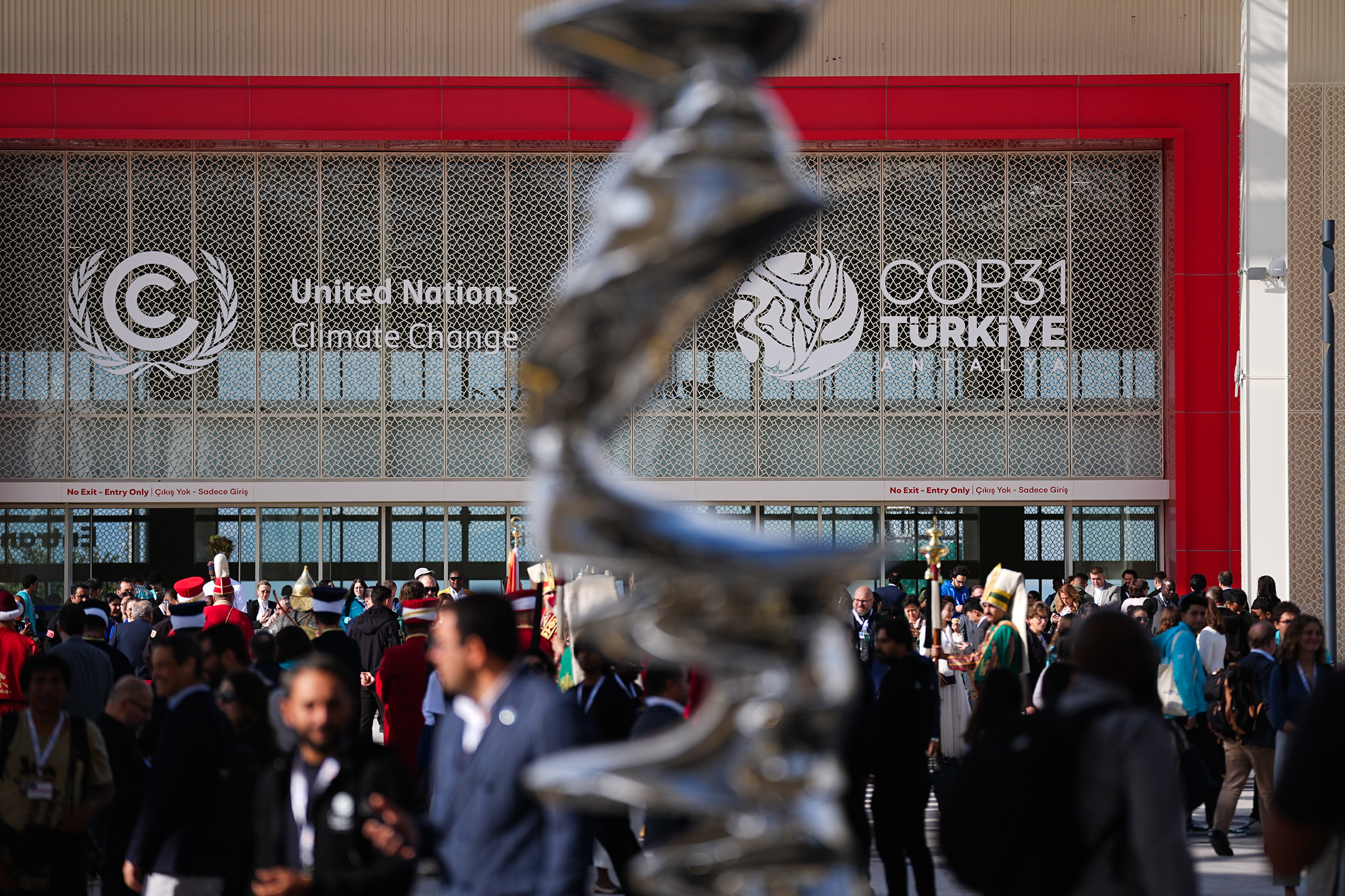
Photo: Adem Kutucu - Anadolu Agency

Standfirst: Forests dominated the nature stage, money moved, and jurisdictional REDD+ came of age, but talks on joining up climate, nature and land stalled. As COP31 heads into its final week, the question is whether Antalya can build on the momentum nature gained at COP30 and turn it into text, finance and delivery.
COP31 opened in Antalya on 9 November billed as an “implementation COP”. For nature, week one delivered a mixed scorecard. In the negotiating rooms, talks on joining up the three Rio Conventions on climate, biodiversity and land ended with no outcome and were pushed back to June 2027. Nature barely featured in the opening ceremony or in most leaders’ speeches. Yet beyond the plenary halls, forests, the Tropical Forest Forever Facility, jurisdictional REDD+, the ocean and peatlands produced some of the week’s most concrete news, and an early list of elements for the cover decision recognises nature-based and ocean solutions as “concrete solutions”. Nature also held its own in the media, featuring in roughly a quarter of the COP31 coverage we monitored. Not bad for a COP that was never billed as a “nature COP”.
All of this played out against a stark backdrop. The Climate Action Tracker projects 2.7°C of warming under current policies. The Global Carbon Budget, released at the summit, found that rising emissions from deforestation and peat fires will push total CO2 to a record 43.3 billion tonnes, even as fossil emissions dip for the first time since 2020. And in his last COP press conference as UN Secretary-General, António Guterres said plainly that overshooting 1.5°C is now inevitable, and must be kept as small and as short as possible. If overshoot is coming, the fastest levers to limit its height and duration matter more than ever. Ending deforestation is one of them.
“You cannot promise young people a better future while destroying the natural systems on which that future depends.”
António Guterres, UN Secretary-General
An Implementation COP in an Overshoot World
Inside the negotiating rooms, the first week was slow and, at times, fractious. Parties’ written inputs to the cover decision, the conference’s main political outcome, were due on 14 November, with a first draft expected early next week. At the late-night closing plenary, the Like-Minded Developing Countries, the Arab Group and Russia rejected any global or sector-specific targets. Russia also objected to the Presidency’s 35% electrification goal and to voluntary roadmaps. The EU, the Umbrella Group, Switzerland, the Pacific small island states and the Least Developed Countries backed the Presidency.
Still, there are early openings for nature. On Thursday, the Presidency shared a bulleted list of elements for countries to consider for the cover decision. It is not a draft text, but a menu of what could be included. It recognises nature-based and ocean solutions as “concrete solutions”, and points to the COP30 forest roadmap and the Ocean Dialogue as opportunities for stronger international cooperation. Mountains, championed by Nepal, Bhutan and Kyrgyzstan after this year’s devastating “mountain tsunamis” in Nepal, also earned a mention. Whether any of this makes it into the first draft, expected on Monday, remains to be seen.
Cross-cutting fault lines ran through everything. The Global Goal on Adaptation, national adaptation plans, the mitigation work programme, just transition and Article 6 were all forwarded to week two without agreement, leaving ministers to bridge the divides between mitigation and adaptation. Meanwhile, a fight over the budget and timing of the IPCC’s next assessment, with several fossil fuel-reliant countries pushing for delay, raised alarm among scientists that it may not be ready in time to inform the next Global Stocktake.
Johan Rockström, Director of the Potsdam Institute for Climate Impact Research, criticised attempts to question science’s role in guiding policy, reminding delegates that the UN climate convention’s founding articles were built on the premise of science-guided climate action.
“This is a deliberate effort of trying to tune down and sideline the IPCC… The next global stocktake is meant to be informed by the latest science, and there is a political effort to try and kind of misalign these so that the IPCC will not be able to have the results finished in order to inform the next global stocktake.”
Johan Rockström, Director, Potsdam Institute for Climate Impact Research
A weaker IPCC is a particular risk for nature. “The risk extends to nature-based solutions, where estimates of carbon sinks, for example, vary widely depending on definitions and methods,” said Giacomo Grassi, IPCC co-author and member of the IPCC Task Force Bureau. “The IPCC is our shared navigation system. Switch it off, and everyone drives by their own map.”
Forests Take Centre Stage
Forests were the main nature thread of the week, starting on day one with the COP30 Presidency’s relaunch in Antalya of its Roadmap to Halt and Reverse Deforestation and Forest Degradation by 2030, which had been officially published a few days before the conference opened. Built from more than 180 contributions, it sets out action across national efforts, international cooperation and finance. It is non-binding, so its impact depends on who picks it up. Brazil moved first, adopting a national roadmap and setting out a follow-up plan: political meetings every six months, annual progress reports from FAO, UNEP, UNDP and the UNFCCC secretariat, and a push for the roadmap to be recognised as an input to the second Global Stocktake. President Lula used his national statement to ask Türkiye and Australia to make sure that happens, but talk in the Blue Zone corridors was far less confident that a Global Stocktake link will make it into the final text.
The finance gap is the heart of the matter. UNEP put forest finance at US 84billion in 2023, against a need for US 300 billion a year by 2030. The Leaders’ Summit Event on Forests on 11 November was the week’s high point for nature. Cheers for President Lula briefly delayed proceedings, and the event brought new money and renewed commitments to the Tropical Forest Forever Facility (TFFF):]
- Philanthropy: a coalition led by the Children’s Investment Fund Foundation announced plans to commit more than US$88 million, the largest philanthropic show of support for the facility to date, plus further funds for country readiness.
- Governments: the Netherlands restated US$500 million over ten years, Indonesia reaffirmed US$1 billion, the UK restated up to £400 million, and Norway said it is ready to provide up to 20% of the initial US$10 billion target.
- Canada: on 15 November, Canada pledged up to C$560 million (around US$400 million), a major boost to the coalition behind the fund.
Brazil says nearly US$8 billion has been mobilised with partners, and 66 countries, plus the EU, have endorsed the facility. During the week, media reports put the remaining gap to the US$10 billion year-end target at around US$2 billion.
Forest countries also came with commitments of their own. Indonesia pledged not to expand agriculture into forests, especially primary forests, set up a national agency for peatland and mangrove management, and will increase forest rangers and firefighters from 8,000 to 70,000. Germany and Costa Rica took over as co-chairs of the Forest & Climate Leaders’ Partnership, with Bolivia and Indonesia joining.
“Our success must be measured not by new announcements, but by forests preserved, communities empowered, and financing delivered.”
Special Presidential Envoy for Climate and Energy, Indonesia
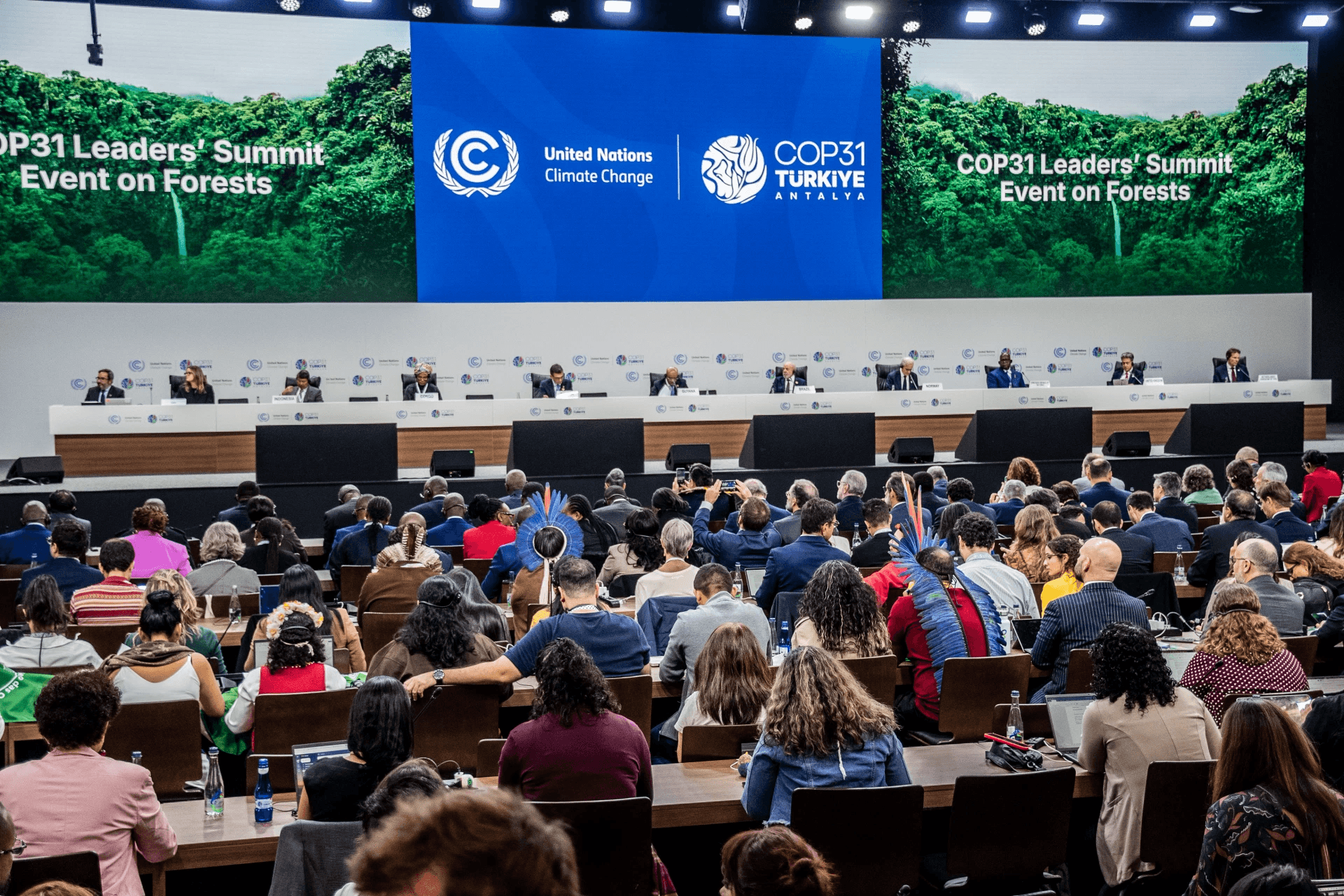
Photo: Pat Hinton/FCLP
Jurisdictional REDD+ Comes of Age
The most concrete delivery news of the week came from jurisdictional REDD+. Ghana became the first African country to receive credits under ART’s TREES Standard, with 6.57 million credits issued for reducing deforestation and forest degradation across around 2.5 million hectares of its cocoa-forest landscape. These are also the first TREES credits to carry the ICVCM’s Core Carbon Principles label, opening the way for Ghana to access finance through the LEAF Coalition. Initial payments are expected to reach around US$43 million, with more than two-thirds of the net proceeds going directly to farmers and communities. In Guyana, more than 30 airlines now buy the country’s forest carbon credits, with revenues expected to exceed US$100 million this year and 20% going to Indigenous communities.
Indonesia published its TREES Concept on the ART Registry, covering nine provinces and around 40% of the country’s forests. With Indonesia on board, the ART programme now covers 37 jurisdictions and 500 million hectares, more than a quarter of the world’s tropical forests and an area larger than the EU.
“Jurisdictional REDD+ is moving from proof of concept to a functioning market.”
Lucy Almond, Chair, Nature4Climate
The fight now is over the rules. As talks on the Paris Agreement Crediting Mechanism under Article 6.4 got under way, country after country warned that the technical rules being drafted, applied together, could shut out entire sectors, including nature, and with them part of the revenue that flows to the Adaptation Fund. That matters: around 80% of carbon credits from the Global South come from nature. Countries called for pathways for high-integrity nature-based solutions, including jurisdictional REDD+ building on the Warsaw Framework, and for guidance on large-scale crediting programmes to avoid double counting. Solomon Islands opposed strict additionality rules that penalise communities that have already protected their forests. “There is demand, so we’re seeing demand, but insufficient supply to meet it,” said Lina Barrera of Conservation International.
Article 6 now goes to ministers in week two, but delegates on the ground are positive: “In the forests and climate world, we worry a lot about tipping points of the bad kind, but there are also good ones. I think we may be on the cusp of positive tipping points, where Ghana’s issuance of high-integrity JREDD+ credits may be what tips us into a cascade of forest climate finance through carbon markets”, said Frances Seymour, Senior Policy Advisor, Woodwell. “We may be on the cusp of a tipping point for the capitalisation of the TFFF where everybody wants to pile in and be part of this. We may be at a tipping point for corporations that gain a sense of obligation to calculate and disclose these risks, and then that shifts their investments. And maybe on the debt issue, we’re also reaching a tipping point where it’s just unsustainable. It’s not that we’re going to solve the problem immediately, but I think it’s plausible that we could get there.”
Ocean, Coasts and Wetlands Rise Up the Agenda
The ocean had a strong week. At the Ocean Dialogue, Parties broadly backed a multi-year roadmap linked to the second Global Stocktake, and the ocean features in the Presidency’s summary of views for the cover decision. Canada and Palau will lead ministerial consultations on oceans from Monday. Indonesia’s second NDC targets the restoration of 600,000 hectares of mangroves, the Bahamas presented its seagrass Blue Carbon programme, and Kenya restated its pledge to restore 61,000 hectares of mangroves and 39,000 hectares of seagrass by 2030.
The Pacific Resilience Facility, which provides non-debt grants for community resilience and includes nature-based solutions in its scope, received its first philanthropic commitment: US$5 million from Minderoo Foundation, alongside new money from Ireland and the Netherlands.
“The ocean is now at the top table in climate negotiations. I’m very hopeful that Turkey will be announcing an Antalya Ocean Compact. I’ve been working on this since the Pacific meeting in Fiji. If that compact is announced, I think we’re going to be leaving Antalya saying yes, this was truly a beautiful COP. I think we’re on the right track now.”
Peter Thomson, UNSG’s Special Envoy for the Ocean.
Wetlands closed the week. The Peatland Breakthrough launched on 14 November, with 2030 targets to halt the loss of intact peatlands, restore at least 30 million hectares and mobilise at least US$100 billion. Germany, Peru and Uganda are champion countries, and Ireland has joined. Development bank CAF raised its green-lending target to 50% by 2031, with 10% allocated to biodiversity. Peatlands cover only 3–4% of the planet’s land but store up to one-third of its soil carbon, while drained and degraded peatlands cause an estimated US$350 billion a year in climate damage.
“When we look at our figures at home, if our peatlands fall dry, that means 7% of our emissions.”
Heike Henn, State Secretary, German Federal Environment Ministry
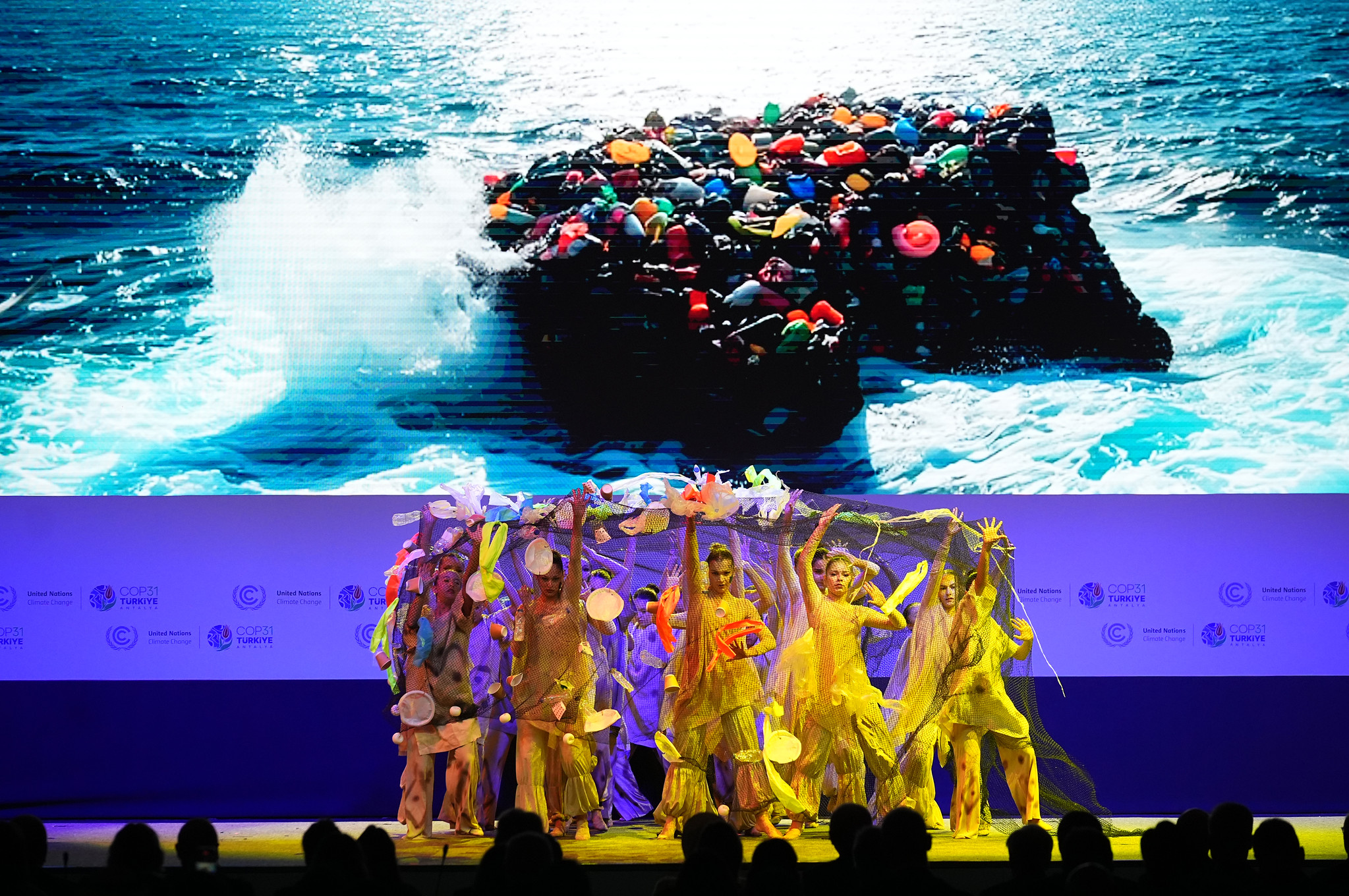
Photo: COP31 Press
No Effective Adaptation Without Nature
Nature’s role in resilience came through clearly. At the Baku High-Level Dialogue on Adaptation, CBD Executive Secretary Astrid Schomaker called healthy ecosystems the cheapest and fastest adaptation infrastructure available, and Kiribati, Peru, the Philippines, Bhutan and the EU echoed the call. Yet the money is pointing in the opposite direction: around US$220 billion a year goes to nature-based solutions, compared with US$7.3 trillion for activities that harm nature.
“There is no effective adaptation without nature.” Astrid Schomaker, Executive Secretary, Convention on Biological Diversity
The negotiations were less encouraging. The push to triple adaptation finance fell off the agenda, and while talks on the Belém indicators under the Global Goal on Adaptation progressed, the sense in Antalya is that the major milestones will be saved for COP32 in Addis Ababa.
Synergies Stall, but the Coalition Holds
The week’s biggest disappointment for nature came in the talks on cooperation between the three Rio Conventions on climate, biodiversity and land. Despite strong support from most governments, including Pacific island states, Latin American countries and the EU, the agenda item closed with procedural conclusions only, pushing the discussion to June 2027. Groups representing 66 countries voiced their disappointment at the closing plenary.
“We gathered under the agenda item that includes cooperation in its title, yet cooperation itself became a missing element in these discussions.” European Union, SB65 closing plenary.
Yet the year’s three Rio COPs, in Ulaanbaatar, Yerevan and Antalya, have built real political momentum. The outgoing CBD and UNCCD presidencies both spoke on synergies in the High-Level Segment, and Türkiye’s Rio Synergies Group for Action will showcase national flagship actions on the road to COP32. At the N4C event co-organised with Climate Policy Radar, speakers agreed that the guidance and political will exist, and that the gap is implementation.
“Three interconnected crises need interconnected solutions… We’re more committed than ever, and we will get there.”
Cathy Yitong Li, Senior Policy Manager, BirdLife International
People at the Heart of Forest Protection
Indigenous Peoples and local communities were a constant presence. The TFFF’s commitment that at least 20% of resources go to them was cited throughout the week. The UK said it has completed its delivery plan for the Intergovernmental Land Tenure Commitment, Indonesia set a target of 1.4 million hectares of customary forest by 2029, and Brazil’s Minister of Indigenous Peoples, Eloy Terena, announced work on an Indigenous Peoples’ Roadmap. Still, access remains the sticking point: Hindou Oumarou Ibrahim noted that only 7% of the US$1.7 billion pledged to Indigenous Peoples at COP26 has reached communities.
“As was the case at COP30, we now have a new package of Indigenous territories ready for demarcation… President Lula has made a commitment to me that, before the end of 2026, we will sit down and sign off this together.” Eloy Terena, Minister of Indigenous Peoples, Brazil.
What to Expect in Week Two
Week one put nature’s case on the table. Week two will decide how much of it makes it into the text. Here is what we’ll be watching:
- The cover decision: whether the first draft, expected on Monday, picks up nature-based and ocean solutions and the COP30 roadmaps, links the Forest Roadmap to the second Global Stocktake, and responds seriously to overshoot.
- Article 6: whether ministers give the Supervisory Body guidance that balances integrity with practicality, so nature is not locked out of carbon markets.
- Ocean: whether Canada and Palau’s ministerial consultations deliver a multi-year plan for the Ocean Dialogue and a clear home for ocean outcomes.
- Adaptation: whether ecosystem-based approaches find a place in the Global Goal on Adaptation indicators and national adaptation plans, even if the big milestones are left for COP32, and whether adaptation finance gets a credible pathway.
- Finance: further TFFF announcements towards the US$10 billion target, and progress on Pacific Resilience Facility capitalisation.
- Nature Day (17 November): the Presidency’s Ocean, Seas, Nature and Land Use Day is nature’s moment in Antalya. N4C will join the Action Agenda’s Axis 2 on forests, oceans and biodiversity to support the launch of the Power of Nature Plan to Accelerate Solutions, co-hosted by the ENACT Partnership and N4C. Join us at Synergy in Action: Accelerating High-Impact Peatland and Wildfire Solutions (15:00–16:00, Special Event Room 3 – Assos), organised by Wetlands International (Peatland Breakthrough), IUCN (Power of Nature PAS) and FAO (Fire Management PAS and the Global Fire Management Hub).
- N4C on the ground (18 November): join us for Forests Roadmap: From Milestone to Movement and Three COPs, One Agenda.
The pieces are in place: a roadmap, a fund nearing its first target, carbon markets that are finally paying forest countries, and a growing coalition for the ocean and wetlands. What’s missing is the political will to lock them in. With overshoot no longer a hypothetical, nature is one of the few emergency brakes the world can pull right now. The question for Antalya’s final week is whether governments will pull it.
“Protecting forests now prevents emissions now.” Christopher Schwalm, Woodwell Climate Research Center