Photo: Mariana Ceccon/Nature4Climate
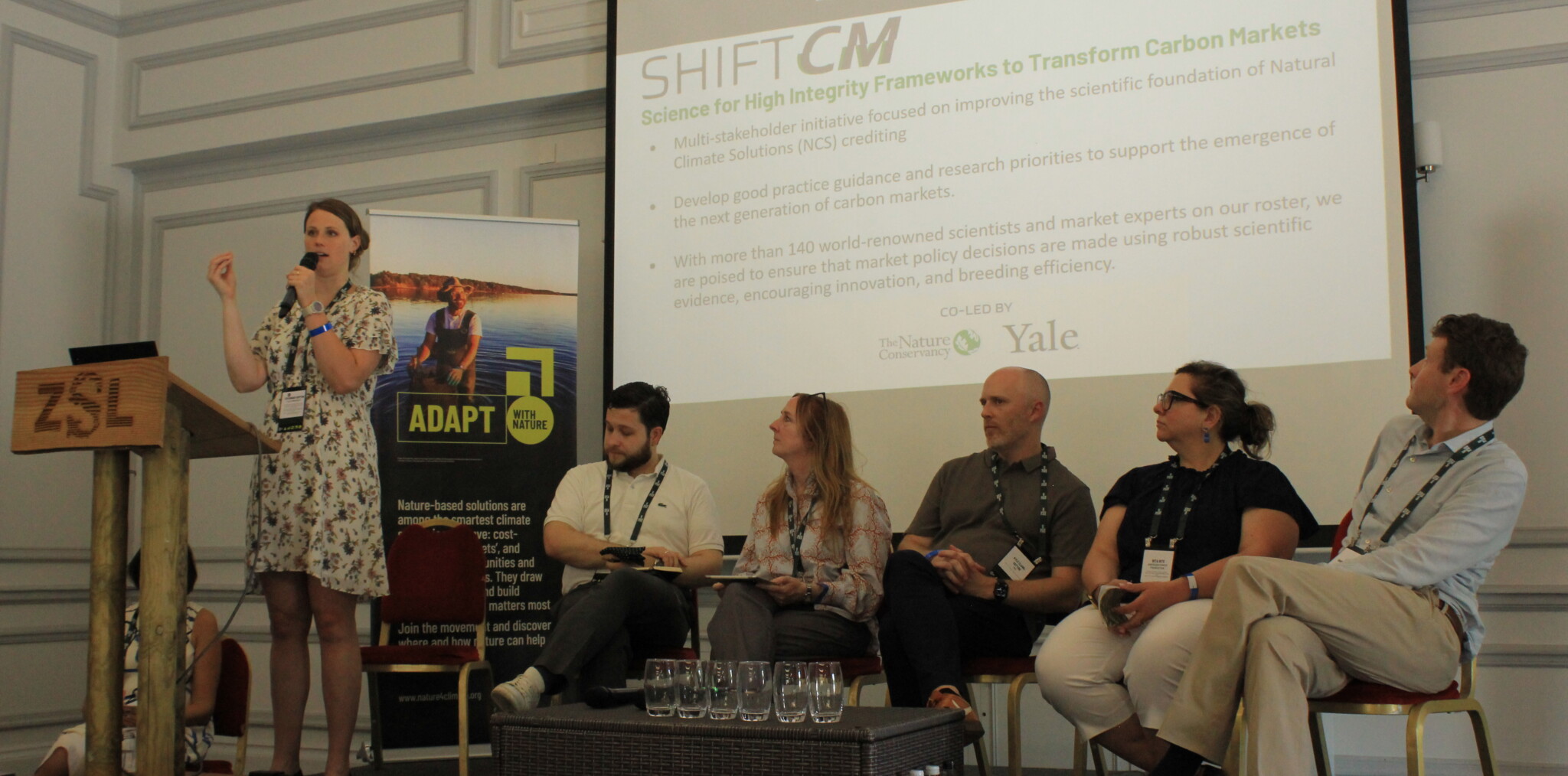
For years, the debate over permanence has been one of the most contested and most paralysing in carbon markets. Can a forest really hold its carbon for a century? What happens if it burns? Is nature too risky to count? At the Nature Hub during London Climate Action Week, a panel of standard setters, scientists, project developers, and buyers set out to move that conversation somewhere more useful. The premise was simple: reversal risk is real, but it is manageable. The question worth asking is not whether every tonne can be guaranteed forever, but how to design, combine, and continuously improve the tools that manage risk, so the market can act now with nature-based solutions while engineered options mature. The greater climate risk, the panel agreed, is delay.
Read more
Related articles for further reading
FROM BINARY TO SPECTRUM
Much of the difficulty, speakers argued, comes from the language itself. “Permanent or not” sets up a false choice that the climate timeline cannot afford. In its place, the panel offered “durability”: a measurable metric combining the timeframe carbon is held out of the atmosphere and the likelihood it stays there. Framed this way, storage is not simply permanent or temporary. It sits on a spectrum, and the market can work to make it more durable over time.
That reframing carries a practical corollary. Different claims and policies require different storage durations, captured in the idea of a durability threshold: the length of time carbon must remain stored to meet a specific goal. Rather than holding every credit to a single, universal standard, the panel suggested matching durability to purpose. A credit fit for one use case need not clear the same bar as another.
PERFORMANCE, NOT PATHWAYS
If durability is a spectrum, how should policy treat it? The answer offered was to build standards around performance rather than around specific technologies. Policymakers should define the atmospheric outcome they want, the durability threshold, and then allow any carbon removal pathway to meet it through contracted durability: the legal and financial mechanisms that ensure a credit represents carbon stored for a defined duration. This creates a level playing field across nature-based and engineered solutions alike.
This matters because current approaches tend to fail in one of two ways. Some set durability bars so high that only a handful of technologies can clear them, sidelining solutions the world needs to scale now. Others admit lower-durability pathways but neglect to ensure storage over the long term, leaving a “long tail” of liability after monitoring stops.
BEYOND BUFFER POOLS
Buffer pools, the market’s workhorse for managing reversals, received both credit and scrutiny. They function, they are improving, and they maintain atmospheric integrity when individual projects falter. But they cannot do everything, particularly once a project’s monitoring period ends. The panel pointed to a wider menu: insurance, permanence trusts, horizontal and vertical stacking, trust funds, and risk- and time-weighted accounting. Carbon trust funds and horizontal stacking drew the most interest as the newer tools capable of carrying liability across that long tail.
A recurring theme was who should bear the burden. Too often, the cost and responsibility of managing reversals falls on individual developers, especially the small ones. Alternative or combined mechanisms shift that weight onto shared market infrastructure and other players. And they could, potentially, improve overall project economics: the American Forest Foundation reported that modelling its Permanence Trust improved its own business case by 15 to 30 percent.
That shared-infrastructure logic was central to the session. Not every buyer can model durability across a thousand-year horizon the way a sophisticated corporate buyer might. Independent, perpetual institutions, endowment-like in structures, can manage that risk on behalf of the market, passing the baton across stacked mechanisms so that the finish line is reached even when individual projects last only decades.
COMPLEMENTS, NOT COMPETITORS
The buyer perspective reinforced the portfolio logic running through the week. Superpollutant reduction, nature, and engineered removal are not rivals but complements, acting on near-, medium-, and long-term warming respectively. Stacking them together is how real capital gets deployed against the full timeline of the climate problem.
Underlying all of this was a case for the institutions, shared terms, and clear references that answer the simple questions buyers and regulators actually ask, and which open the floodgates for investment. Frameworks exist to enable action, not to scratch a regulatory itch.
A PRACTICAL TURN
If one signal defined the session, it was the deliberate shift from high-level debate to implementation. The tools are real, the pilots are underway, and the policy windows are open now: the ICVCM’s second Continuous Improvement Work Program on Permanence, California’s regulatory update under SB 905 and Cap-and-Invest, and parallel processes at SBTi, the EU CRCF, and Article 6.4. The American Forest Foundation’s plan to pilot its Permanence Trust within the year offered a concrete marker of that turn.
Reversal risk has not gone away. But the conversation has matured from whether nature belongs in the portfolio to how the market can manage its risks well. That is a far more productive place to be.