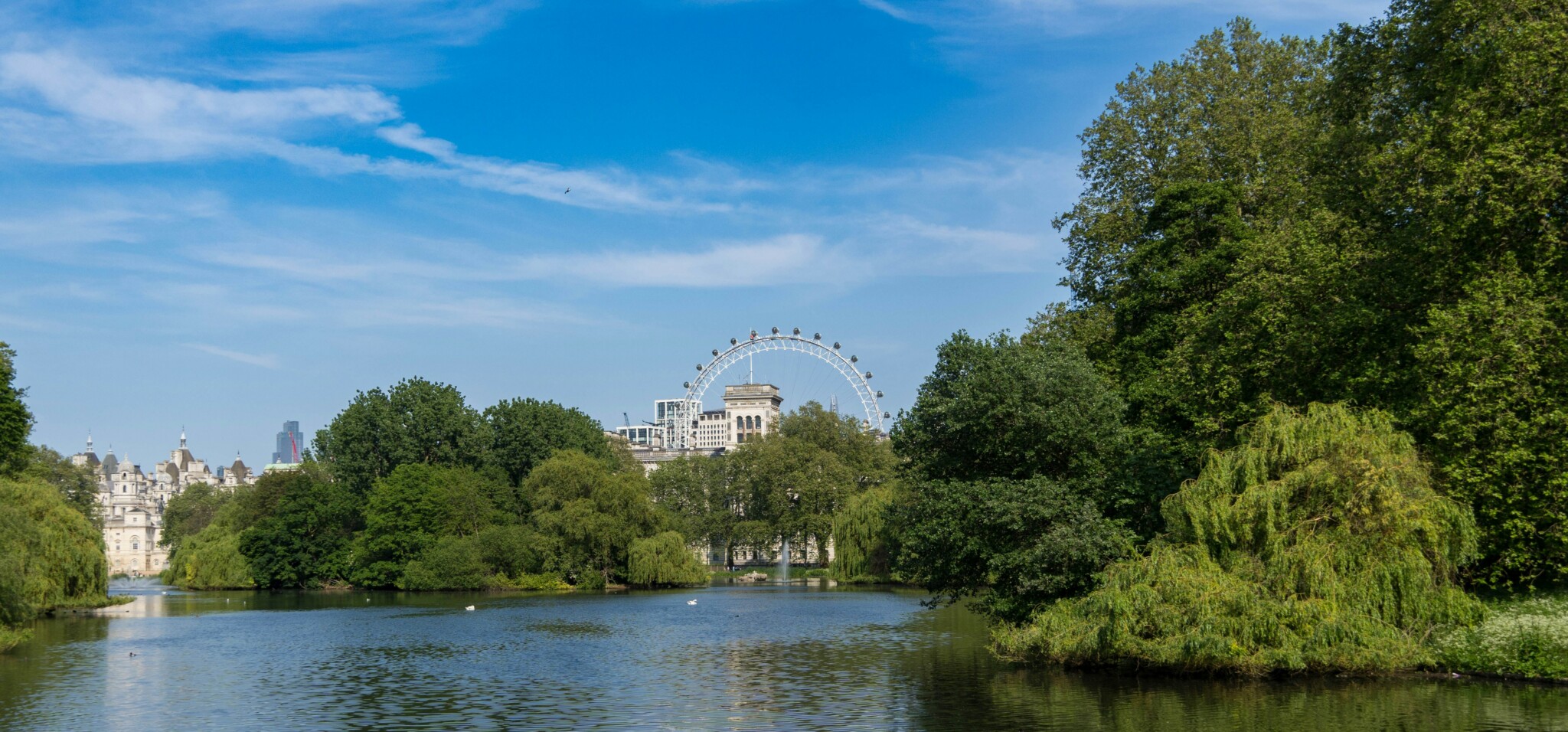
Photo: Antonio Vivace
In the final stretch of June, news headlines may turn away from the World Cup and the looming threat of a devastating El Niño, if only for a week, even if only in London. From 20 to 28 June, the UK capital will host the 8th edition of London Climate Action Week (LCAW), already billed as the “biggest” yet, with expectations that last year’s record of more than 700 events will be surpassed, alongside countless others outside the official programme, taking on a life of their own. The week also promises the presence of five COP presidencies among its honoured guests.
Read more
Related articles for further reading
Even ahead of the full programme release in mid-June, early signals suggest that nature-related discussions will once again account for roughly one-third of all events, in line with 2025, proving that recognition of nature’s role in both mitigation and adaptation is maintaining its momentum. On the other hand, explicit links between nature-related topics and the UN climate process appear more subdued than last year, leaving the nature movement wondering whether the biggest LCAW will also be the biggest one for nature-based solutions.
At LCAW 2025, Brazil’s COP30 presidency maintained a marathon level presence, using London as a platform to pitch its Tropical Forest Forever Facility (TFFF) proposal and underscore the symbolic importance of hosting a COP in the Amazon. This year, engagement from current and incoming presidencies with nature matters is expected to be more concentrated around a smaller number of high-level convenings.
Among them are the early Monday (22 June) sessions of the Climate Investment Forum and the closed-door Climate and Nature Summit at Kew Gardens (23 June), where the COP presidencies from Brazil, Türkiye and Ethiopia will lead discussions on positioning forests as a central pillar of climate implementation and sustaining momentum since COP26 in Glasgow. Many are looking to a potential update to the Roadmap for Halting Deforestation and Forest Degradation as a key moment, an initiative led by the COP30 Presidency to accelerate global action on forest loss this decade. Emerging from the UNFCCC Global Stocktake, the Brazilian-led Roadmap aims to translate political commitments into implementation and is widely seen as critical to securing a strong outcome.
Leaders from the three Rio Conventions — climate, biodiversity and desertification — are also expected to convene at Kew, showcasing cross-sector synergies. This gathering is shaping up to be the week’s most prominent high-level moment for nature, although detailed information about the summit has yet to be made public.
Key events and themes
At a time when global climate diplomacy faces mounting geopolitical and economic headwinds, LCAW 2026 is positioning itself around the theme “Cooperation in a fragmented world”, a much-needed push that Nick Mabey, founder of LCAW, defends in his overview of this year’s edition as a response to the paralysis of multilateral action “in the face of great power interests and development budget cuts due to competing priorities and political scepticism”. Mabey argues that LCAW’s growth, alongside the rising popularity of other climate weeks, is a direct response. “Many commentators assume this [multilateral paralysis] reflects declining public support or reduced climate action. This could not be further from the truth.”
Beyond international cooperation, the week’s programme will revolve around four sub-themes: building, investing in, and innovating the clean economy; understanding climate risk and strengthening resilience; mobilising whole-of-society climate action; and, finally, regenerating nature and oceans.
In this last area, this year’s conversations will reflect a growing consensus: climate resilience, biodiversity protection, and economic stability can no longer be treated as separate challenges.
A first scan of this year’s programme points to four dominant themes shaping nature-related discussions:
- Supply chain resilience, particularly water stress — driven by both acute shocks and long-term environmental decline — and its intersection with emerging technologies;
- Nature in the new economy and investment opportunities linked to restoration, resilience and innovation, including the blue economy, nature tech and advances in environmental data systems;
- Scaling finance, especially through carbon and biodiversity crediting. Anticipated updates to the Science Based Targets initiative’s Net-Zero Standard are expected to influence demand-side dynamics, with issues such as permanence and durability already prominent across the events programme;
- Oceans, finance and adaptation, which are likely to feature strongly in light of the Pacific-led focus of the pre-COP31 gathering.
In addition to the Climate Innovation Forum and the Climate and Nature Summit at Kew, the public will encounter these discussions mainly at the Nature Hub (see more below), taking place on 25 June, and across platforms including the London Resilience Finance Summit, Reset Connect (nature-based solutions stage), and the Burgess Park Climate & Nature Festival during LCAW’s opening weekend. New convenings this year include an Oceans Hub and the Blue Earth Forum.
>>>Click here to explore our curated list of nature-related events taking place across London.
The week is also expected to see a series of key announcements shaping the investment landscape. On 22 June, the World Business Council for Sustainable Development (WBCSD) will launch its Business Breakthrough Barometer, offering a snapshot of corporate momentum behind the climate transition. The Nature Conservancy and Forest Trends are preparing a new “State of Private Investment in Nature” report, while the Climate Policy Initiative will host an event unveiling the upcoming Global Landscape of Climate Finance 2026 results, providing an in-depth analysis of global climate finance, including the scale and distribution of adaptation flows and persistent gaps in vulnerable regions.
The Nature Hub – Investing With Nature
Against this backdrop, Nature4Climate and its partners will convene the Nature Hub on Thursday, 25 June, at the London Zoo, bringing to its programme the expertise of 31 environmental organizations from across the coalition. The event is expected to welcome around 350 participants from finance, business, government, technology, and civil society to discuss the future of investment, resilience, and nature-based solutions.
From permanence in carbon markets to adaptation finance, many of the challenges in the nature-based solutions landscape cannot be tackled within a single sector. They require stronger alignment between capital, policy, science, and delivery. The Nature Hub aims to bring these conversations together, with the seniority needed to move them forward.
“This year’s hub discussions reflect an evolution into the different ways that the public and private sector can invest with nature,” said Lucy Almond, Chair of Nature4Climate, who will open the Hub alongside The Nature Conservancy CEO Jen Morris and the UN Climate Change High-Level Champion for COP26, Nigel Topping.
“Nature is increasingly being recognized not as a niche environmental asset class, but as a foundation for long-term economic resilience and growth. From regenerative agriculture and restoration economies to adaptation infrastructure and bioeconomy innovation, investing with nature is becoming tied to competitiveness, supply chain stability, and future prosperity.”
Lucy Almond, Chair of Nature4Climate.
Throughout the day, sessions will examine how businesses, investors and policymakers can accelerate this transition in practice, alongside a growing recognition that no single financial instrument can deliver it alone. A portfolio approach — combining blended finance, carbon markets, public finance, direct community investment and other mechanisms — is increasingly seen as essential to unlock capital, diversify risk and support more resilient outcomes.
Key topics include scaling investment in natural climate solutions, strengthening resilience strategies, improving integrity in carbon markets, advancing deforestation-free economies, and bridging the gap between nature and technology-based solutions.
Deforestation is expected to be one of the Hub’s key diplomatic focal points this year. With momentum building around the COP30 deforestation roadmap and increasing pressure on supply chain accountability, the focus is shifting from commitments to implementation, particularly in how the private sector aligns finance, procurement and investment. At the Hub, a plenary session featuring a representative from the COP30 Presidency will address these questions and how they connect with the upcoming roadmap.
The Nature Hub is convened by the Nature4Climate Coalition, with the support of its members — Zoological Society of London, The Nature Conservancy, and FSC — and in close collaboration with its strategic partners: Salesforce, KPMG, ACR, Accountability Framework initiative (AFi), aDryada, Arbor Day Foundation, Legal & General, NativState, Nuveen Natural Capital, Okala, Plan Vivo, and Satelligence.
Registrations for the Hub are now closed. Media enquiries can be sent to mariana.ceccon@nature4climate.org.